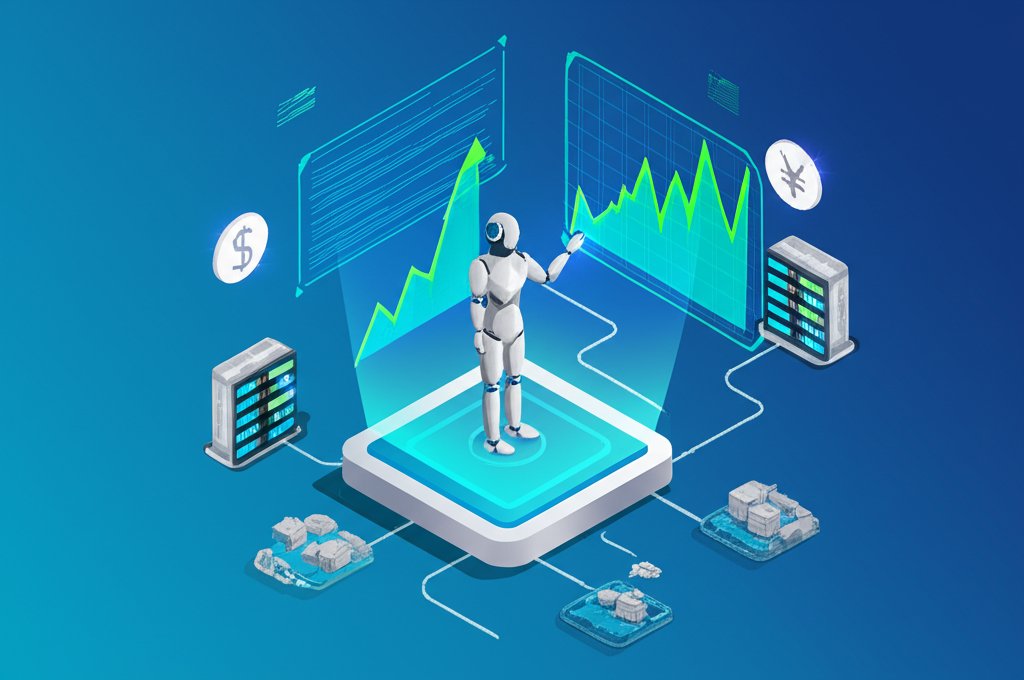
In the fast-paced world of financial markets, the idea of a "trading robot" conjures images of sophisticated software autonomously making profitable decisions, often while you sleep. But what exactly are these digital traders, and can they truly deliver consistent returns for your portfolio? It's a complex landscape, often muddled by hype and misinformation. As a seasoned observer of the financial tech scene, let's cut through the noise and explore what trading robots are, how they function, and, most importantly, if they genuinely have a place in your investment strategy.
At a Glance: What You Need to Know About Trading Robots
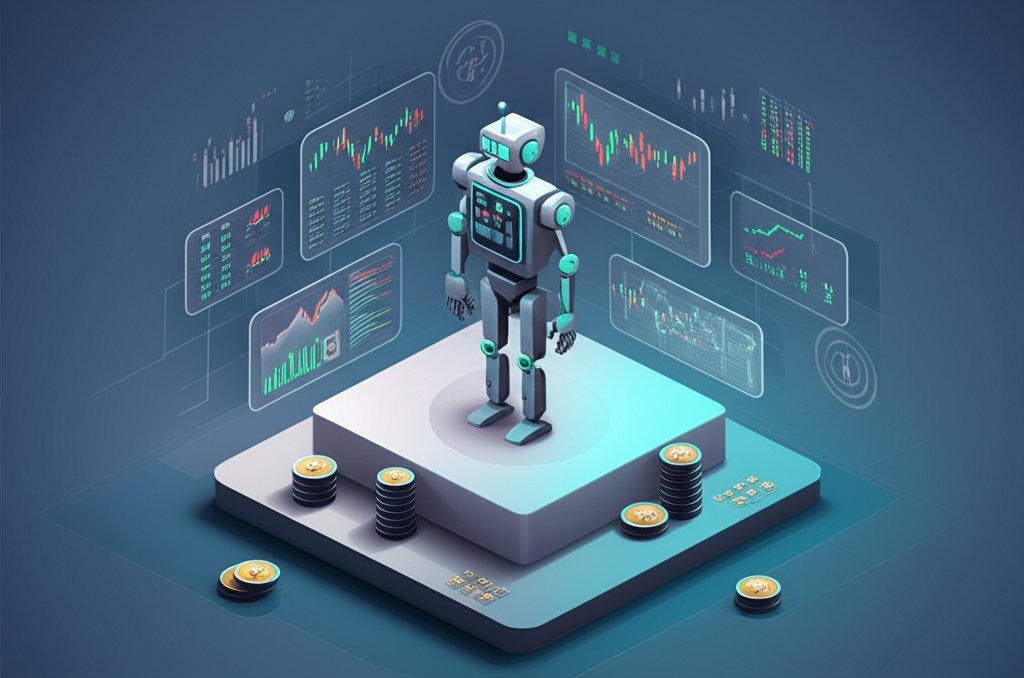
- Not a Magic Bullet: Trading robots (or bots) are powerful tools, but they're not a guaranteed path to riches. They require careful selection, monitoring, and an understanding of their limitations.
- AI Software vs. Bot: AI trading software provides the infrastructure (data, analytics). A bot is a program that uses this software to generate recommendations or execute trades. They're related but distinct.
- Four Main Categories: AI trading tools generally fall into robo-advisors, research automation, alert assistance, and execution automation.
- Speed & Emotion-Free: Bots excel at executing trades faster than humans and without emotional bias, which can be a significant advantage.
- Significant Limitations: They struggle with unexpected events, lack contextual understanding, and are prone to "hallucinations" (inaccurate data interpretations) or manipulation.
- Human Oversight is Key: The most effective use of AI in trading is as an enhancement to human strategy, not a full replacement for decision-making.
Unpacking the "Trading Robot": More Than Just a Program
When you hear "trading robot," you're likely thinking about a piece of software that can analyze market data, identify opportunities, and execute trades on your behalf, all without human intervention. This vision is largely accurate, but the specifics matter.
At its core, AI trading software is a sophisticated program designed to gather vast amounts of market and alternative data—everything from price charts and trading volumes to news headlines, social media sentiment, and public filings. It then automates technical analysis, looking for patterns and indicators that suggest potential buy or sell orders.
Think of the software as the brain and nervous system, providing the technical infrastructure and market data. The bot is the specific program or algorithm that leverages this brainpower to make recommendations or carry out actions. So, while they're often used interchangeably in casual conversation, it's helpful to remember that the bot is typically the action-taker that relies on the broader AI software ecosystem.
The Four Pillars of AI Trading
AI-driven trading software broadly fits into four key categories, each serving a distinct function in the investment process:
- Robo-Advisors: These are typically offered through brokerage platforms and automate portfolio management. They use algorithms to build and rebalance diversified portfolios based on your risk tolerance and financial goals, often employing techniques like dollar-cost averaging.
- Research Automation: These tools excel at sifting through mountains of data – both market-specific and alternative data like satellite imagery of retail parking lots or sentiment analysis from news. They help identify trends, risks, and opportunities that would be impossible for a human to process quickly.
- Alert Assistance: Designed to flag potential trading opportunities or risks, these tools use AI to scan markets, apply complex technical analysis, and issue alerts based on predefined criteria or learned patterns. They help you stay ahead without constantly watching the screens.
- Execution Automation: This is where the "robot" truly comes alive. These tools take the signals or recommendations generated by other platforms (or even your own strategies) and automatically place buy or sell orders with your broker. This allows for incredibly fast execution, often capitalizing on fleeting market inefficiencies.
Understanding these distinctions is crucial because a complete "AI trading solution" often involves components from several of these categories, working in concert. For instance, you might use an AI research tool to identify potential stocks, an alert system to flag opportune entry points, and an execution bot to place the trade instantly.
How Trading Robots Actually Work: A Step-by-Step Breakdown
The operational flow of a trading robot, whether it's a simple script or a complex AI, follows a general pattern:
- Data Ingestion: Bots continuously pull real-time market data (prices, volumes, order books) from exchanges and integrate alternative data (news feeds, social media, economic reports, corporate filings). Some advanced systems, like Equbot, even incorporate unconventional data points such as satellite images to gauge retail activity.
- Analysis and Pattern Recognition: This is where the AI truly shines. Using various algorithms (machine learning, deep learning), the bot processes the ingested data. It performs technical analysis, identifies trends, calculates probabilities, and looks for specific patterns or deviations that align with its programmed strategy. For example, Kavout uses market and alternative data to generate "K" ownership scores for quick stock evaluation.
- Strategy Application: Based on its analysis, the bot applies predefined trading rules or learned strategies. These rules dictate when to buy, sell, or hold, often incorporating risk management parameters like stop-loss and take-profit levels. Platforms like Capitalise.ai allow users to define these conditional trading rules in simple English.
- Signal Generation: If the market conditions meet the strategy's criteria, the bot generates a buy or sell signal. For tools like Tickeron and TrendSpider, this might be an alert sent to the user.
- Order Execution: For full automation, an execution bot takes this signal and automatically sends the order to a brokerage account via an API (Application Programming Interface). Signal Stack, for instance, specializes in transferring signals from alert platforms directly to your broker for execution across various security types. This execution happens with lightning speed, often in milliseconds, far faster than any human could react.
The Human Element: Still Critical
While the process sounds entirely automated, the design, training, and ongoing monitoring of these bots are profoundly human tasks. You decide the strategy, adjust parameters, and review performance. Without human oversight, even the most sophisticated robot can go astray, especially in volatile or unprecedented market conditions.
The Promise of Trading Robots: Why Investors Are Interested
The allure of trading robots is clear: they offer potential advantages that human traders simply cannot match.
Speed and Efficiency
Bots can react to market changes in fractions of a second, capitalizing on fleeting opportunities that might vanish before a human could even click a button. This is particularly crucial in high-frequency trading or arbitrage.
Emotion-Free Trading
Fear, greed, and impatience are the bane of many human traders. Robots, by design, are devoid of emotion. They stick to their programmed strategy, executing trades without second-guessing or deviating due to psychological biases. This disciplined approach can prevent impulsive, loss-making decisions.
24/7 Market Monitoring
Unlike humans who need to sleep and rest, a trading robot can continuously monitor markets around the clock. This is especially beneficial in global markets that operate 24 hours a day, such as Forex and cryptocurrency. For those interested in automated currency strategies, you might want to Explore currency trading bots to see specialized options.
Backtesting and Optimization
Before deploying a bot, its strategy can be rigorously tested against historical market data (backtesting) to evaluate its hypothetical performance. Platforms like TrendSpider offer "sandboxes" for testing strategies. This allows traders to refine and optimize their algorithms for better potential outcomes.
Diversification and Scale
A single human trader can only manage so many positions or strategies simultaneously. Robots can manage multiple strategies across various markets and assets, enabling broader diversification and potentially larger trading volumes.
The Peril: Critical Limitations and Risks You Must Understand
Despite their impressive capabilities, trading robots are far from foolproof. Relying solely on them without understanding their inherent limitations can lead to significant financial losses.
Data Dependency and Quality
Trading robots are only as good as the data they receive.
- Availability: Access to comprehensive, high-quality data sets can be expensive or limited, especially for niche markets.
- Latency: Delays in data transfer, even milliseconds, can impact performance in fast-moving markets, leading to missed opportunities or sub-optimal execution.
- Manipulation & Hallucinations: AI is susceptible to manipulated data inputs or can misinterpret data, leading to what's sometimes called "hallucinations"—where the AI confidently presents inaccurate or irrelevant information as fact. This can result in costly trading errors.
Lack of Contextual Understanding & Adaptability
AI systems excel at pattern recognition within the data they've been trained on. However, they struggle with unforeseen, "black swan" events or novel market conditions that deviate significantly from historical data.
- Weak Adaptability: Robots often lack the ability to understand broader geopolitical events, sudden policy changes, or market sentiment shifts that fall outside their programmed parameters. They can't "read between the lines" of a news report or understand the implications of a global crisis in the same way a human can.
- Unexpected Events: A bot trained on stable market data might perform poorly or even catastrophically during periods of extreme volatility or unprecedented economic shifts. Its programmed rules might become liabilities rather than assets.
Over-optimization (Curve Fitting)
Backtesting can be a double-edged sword. While useful, it carries the risk of "over-optimization" or "curve fitting." This occurs when a strategy is so finely tuned to past data that it performs exceptionally well historically but fails miserably in live markets because it doesn't generalize to new conditions.
Technical Glitches and Cybersecurity Risks
Any software is prone to bugs, malfunctions, or system outages. A glitch in a trading robot could lead to unintended trades, rapid losses, or missed opportunities. Furthermore, connecting your trading account to third-party software introduces cybersecurity risks, making secure API management paramount.
Not a "Set it and Forget it" Solution
The idea that you can simply deploy a robot and let it generate passive income indefinitely is a dangerous misconception. Trading robots require continuous monitoring, parameter adjustments, and updates to remain effective. Market conditions evolve, and so too must your bot's strategy.
Choosing the Right Robot: What to Look For
Navigating the landscape of trading robots and AI-powered tools can be daunting. Here's what to consider to make an informed choice:
1. Define Your Goals and Risk Tolerance
Before even looking at software, understand what you want to achieve. Are you looking for long-term portfolio growth, active day trading, or something in between? What level of risk are you comfortable with? Different robots are designed for different objectives and risk profiles.
2. Understand the Robot's Strategy
Don't use a robot if you don't understand its underlying logic. Ask:
- What market data does it use?
- What technical indicators or fundamental analysis does it employ?
- How does it manage risk (e.g., stop-loss, position sizing)?
- How has it performed in diverse market conditions (not just backtested on perfect scenarios)?
3. Transparency and Performance Metrics
Reputable providers will offer transparent performance statistics, including drawdowns, win rates, and maximum daily losses. Be wary of exaggerated claims or providers unwilling to share detailed, verified historical performance. Tickeron, for instance, provides thorough statistics on its bot's performance.
4. Integration with Your Broker
Ensure the robot or AI software seamlessly integrates with your existing brokerage account. Many bots connect via APIs. Compatibility is key for smooth execution. Platforms like StockHero support major brokers through API, allowing you to create your own bots or lease strategies.
5. Cost and Fee Structure
AI trading tools come with various pricing models:
- Subscription Fees: Monthly or annual charges (e.g., TrendSpider at $107/month, Trade Ideas premium at $254/month).
- One-time Purchases: Less common but some bots, like Forex Fury, offer this model.
- Per-execution Fees: Signal Stack charges a fixed fee per executed trade.
- Performance-based Fees: Some services might take a cut of profits.
Factor these costs into your potential returns.
6. Security and Reputation
Research the provider's reputation, read reviews, and understand their security protocols. You're entrusting them with access to your trading account. Community features, like those in BlackBoxStocks, can offer insights but also require discretion.
7. Support and Education
Good customer support and educational resources can be invaluable, especially when you're new to automated trading.
A Look at the Landscape: Popular Trading Robot & AI Tools
The market for AI trading tools is diverse, offering solutions for various investment styles and asset classes. Here’s a closer look at some examples mentioned in our research:
For Automated Portfolio Management
- Acorns: A popular robo-advisor app driven by AI that automatically invests your spare change (or lump sums) into diversified ETF portfolios. It's a prime example of dollar-cost averaging automated by AI.
For Research & Insights
- Equbot: An institutional-focused platform leveraging IBM Watson AI to analyze alternative data (like satellite imagery) for "Portfolio as a Service" solutions across all securities.
- Kensho NERD: A research tool for professionals that sifts through non-financial textual data from news, social media, and other sources to provide insights across all security types.
- Acuity Trading: Caters to retail traders by providing alternative data insights, particularly sentiment analysis, through customizable interfaces for all securities.
- Kavout: Offers equity research that uses both market and alternative data to generate proprietary "K" ownership scores for quick stock evaluations.
- FirstradeGPT: While not a bot for execution, this tool integrated by Firstrade showcases AI's role in enhancing analysis, providing intelligent insights to traders.
For Alert Generation & Analysis
- Tickeron: Provides comprehensive statistics on its various bots and offers AI-powered alerts across Stocks, Crypto, and Forex.
- TrendSpider: A robust AI technical analysis and alerting tool. It offers scanners for tracking stocks, a sandbox for strategy testing, and AI-enhanced alerts across Stocks, Crypto, Forex, Futures, and Indices. It also integrates with Signal Stack for execution.
- BlackBoxStocks: Combines AI software with a strong community chat feature, allowing real-time strategy sharing for Stocks and Options traders.
- Trade Ideas: An AI-driven stock analysis platform, primarily for large personal or money managers. Its AI HOLLY system and OddsMaker are key features, focused exclusively on stocks.
For Automated Execution
- Signal Stack: A unique execution platform that takes signals from various alerting platforms (like TrendSpider) and executes trades directly in your brokerage account, supporting all security types.
- Capitalise.ai: A powerful text-to-execution solution that lets users create complex conditional trading rules in plain English. It connects to both crypto and traditional brokers and supports Stocks, Crypto, Forex, Indices, and Futures.
- Forex Fury: A specialized bot designed specifically for Forex trading on MetaTrader 4 or 5 platforms, available with a one-time membership fee.
- StockHero: Allows users to build their own automated trading bots or subscribe to strategies from its marketplace. It supports major brokers via API and offers a free limited plan.
- 3Commas: A comprehensive AI software and trading terminal specifically built for crypto traders, enabling automated strategies and advanced order types.
- Optionsai: A visual options trading platform that integrates directly with brokers to execute Stock & Options trades efficiently.
This diverse array illustrates that "trading robot" isn't a single product, but a broad category of intelligent tools designed to assist or automate various aspects of the trading and investing process.
Beyond Bots: Using AI as an Investment Partner
The most successful approach to AI in trading views it as a powerful partner, not a replacement for human intellect. True AI trading isn't just about deploying a bot; it involves leveraging AI-enhanced research, intelligent scanners for buy/sell signals, and then using signal executors to send orders to your broker.
Consider these best practices:
- Start Small: If you're experimenting with automated trading, begin with small position sizes and gradually increase them as you gain confidence and understanding.
- Continuous Learning: The markets are always evolving. Stay informed about new AI developments, trading strategies, and regulatory changes.
- Define Exit Strategies: Even with automation, always have a clear exit strategy for trades, whether it's a stop-loss order or a manual intervention plan.
- Monitor and Adjust: Regularly review your bot's performance. If market conditions change or your bot isn't performing as expected, be ready to pause, adjust its parameters, or even disable it.
- Diversify Your Tools: Don't put all your eggs in one robotic basket. Use a combination of tools—human judgment, AI-powered research, and automated execution—to build a robust strategy.
Many sophisticated investors find that AI's greatest strength lies in its ability to process information and identify patterns that humans might miss, acting as an incredibly powerful analytical assistant. It streamlines decision-making and ensures timely execution, but the overarching strategy and risk management still reside with you.
Final Take: Are Trading Robots Right for You?
Trading robots and AI-powered tools offer undeniable advantages in speed, efficiency, and emotion-free execution. They can open doors to strategies that were once only accessible to institutional traders. However, they are experimental by nature and come with significant limitations concerning data quality, adaptability to unforeseen events, and the risk of "hallucinations" leading to detrimental trades.
The effectiveness of any trading robot hinges on its design, the quality and relevance of its data inputs, and the prevailing market conditions. Backtested success doesn't guarantee live market profits.
Ultimately, trading robots are best utilized not as a turnkey solution to wealth generation, but as advanced tools that can significantly enhance an existing, well-thought-out trading strategy. For the informed investor willing to learn, monitor, and adapt, AI can be a powerful ally, augmenting human capabilities and providing an edge in today's complex financial markets. But remember, the human hand on the tiller remains crucial for navigating the unpredictable seas of investment.