In the fast-paced world of digital assets, finding an edge can feel like searching for a needle in a haystack. The sheer volume of data, market noise, and emotional swings often leave even experienced traders feeling overwhelmed. This is precisely where trade signals cryptocurrency come into play, offering a potential compass in the chaotic crypto sea. But with countless providers vying for your attention, knowing how to navigate this landscape—and separate the genuinely helpful from the simply hyped—is crucial for making informed, profitable decisions.
At a Glance:
- Decipher Signal Types: Understand the core differences between paid, free, and AI-driven crypto signal providers.
- Vet Providers Effectively: Learn key criteria like win rate, track record, and community engagement to make smart choices.
- Mitigate Risks: Identify common pitfalls and implement strategies to protect your capital and make informed decisions.
- Implement Best Practices: Discover how to integrate signals into your trading strategy without becoming overly reliant.
- Find Your Fit: Get practical advice on matching a signal provider to your personal trading style and goals.
What Exactly Are Crypto Trade Signals, Anyway?

At their core, crypto trade signals are actionable recommendations. Think of them as insights delivered by experienced analysts or professional traders, outlining specific market moves. These recommendations typically include a precise entry point, one or more profit targets, and a crucial stop-loss level. They're shared across popular platforms like Telegram, Discord, or dedicated apps, designed to cut through the noise and save you countless hours of chart analysis.
The goal? To help you respond swiftly to market opportunities, avoid emotional trading decisions, and capitalize on movements identified by strategies proven through technical, fundamental, or quantitative analysis. These providers monetize their expertise through paid subscriptions or strategic affiliations with brokers, offering a range of services from basic alerts to comprehensive market insights.
The Ecosystem of Crypto Signal Providers: Paid, Free, and AI-Driven
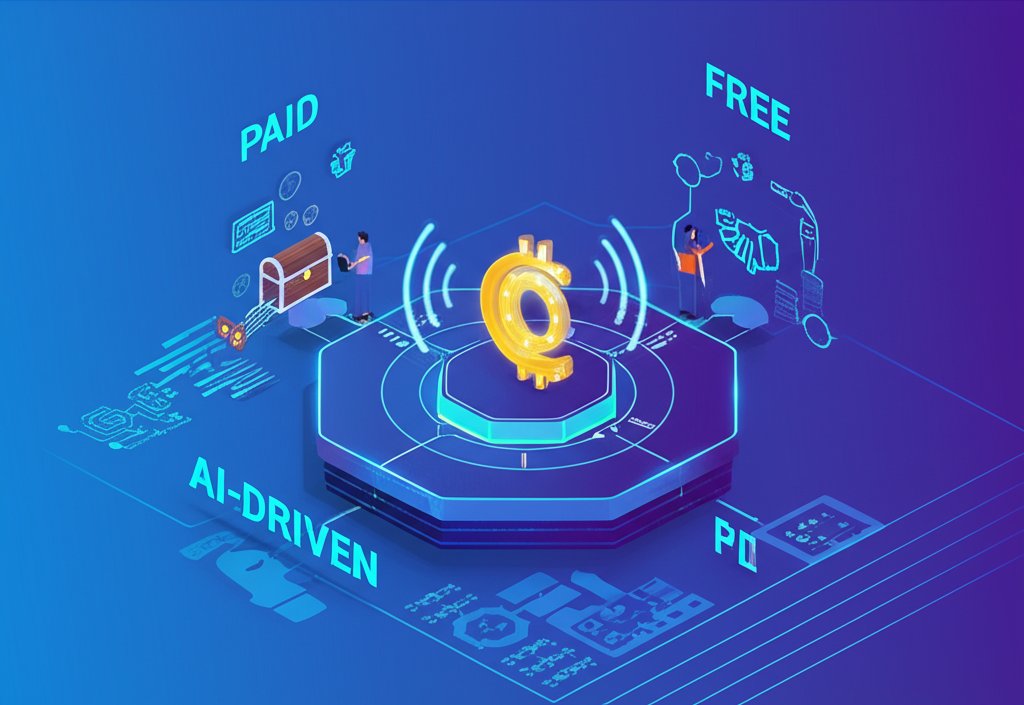
Navigating the world of crypto signals begins with understanding the different types of providers available. Each comes with its own set of advantages, limitations, and suitability for various trading styles. For a deeper dive into the broader landscape of signal providers and how they fit into a comprehensive trading strategy, you might want to Discover best crypto signals.
Paid Providers: When Quality Comes at a Cost
Paid signal providers generally offer a more robust and frequent service. Their subscription models allow for dedicated teams, advanced analytics tools, and often, a higher level of support. Expect features like in-depth market analysis, sentiment tracking, and even "whale" movement alerts. The trade-off is the recurring cost, which demands that the signals deliver consistent value to justify the expense.
- CoinCodeCap: Known for prioritizing quality over quantity. They offer reliable signals with a focus on lower risk, including crypto futures. Their reported success rate is around 80%, with lifetime packages often available.
- Crypto Inner Circle: This provider claims an impressive 92% verified accuracy. They offer multiple profit targets for better risk management and cover a wide range of altcoins. Beyond signals, subscribers gain access to webinars, market updates, and educational content.
- Fat Pig Signals: With a 91.7% success rate, Fat Pig Signals emphasizes deep technical analysis. They provide signals compatible with major exchanges, portfolio strategies, and reviews of new projects, often requiring ETH for subscription.
- Signals Blue: Leveraging AI tools for market monitoring, Signals Blue boasts a claimed accuracy of 90.48% (as of July 2023). Their global analyst team provides 24/7 market coverage, and they offer integration with Cornix for auto-trading.
- MyCryptoParadise: Founded by seasoned full-time traders, MyCryptoParadise offers both free and paid tiers. Their premium packages include spot and futures signals, portfolio services, and market insights, reporting an 80% success rate.
- 3Commas: This platform integrates signals with trading bots, offering a comprehensive solution for automated trading. Available on both Android and iOS, 3Commas allows for fully automated execution of signals.
Free Signals: Getting Started Without Breaking the Bank
Free signal providers are an excellent entry point for new traders or those testing the waters. They often monetize through premium subscriptions or affiliate partnerships. While the quality of free signals can sometimes rival their paid counterparts, their frequency is typically lower. They serve as a good way to observe market movements and validate strategies without initial financial commitment.
- Binance Killer: Delivers signals via X (Twitter) and Telegram. Their free signals provide entry points and short/mid-term targets, while VIP tiers add stop-loss levels. They claim a 92%+ success rate.
- Wolf of Trading: Offers 2-3 free signals weekly, accompanied by market analysis and multiple profit targets. They are known for their more aggressive trading strategies and claim an 81.25%+ success rate.
- Rocket Wallet: Prioritizes transparency, openly acknowledging that not all signals will be 100% successful. Their free channel boasts nearly 40,000 members, with a reported 70% success rate.
- Jacob Crypto Bury: Provides free analysis and some signals on YouTube and his Discord group, alongside paid tiers.
- AltSignals: With a large free Telegram channel (50,000+ members), AltSignals uses their proprietary Altalgo Indicator for real-time market scanning, offering a glimpse into their capabilities before committing to a paid plan.
AI-Powered Signals: The Edge of Automation
AI-based providers are at the forefront of automated trading, using sophisticated algorithms to scan markets, identify patterns, and generate signals. This approach aims to eliminate human error, emotional biases, and significantly speed up reaction times, potentially leading to faster execution of profitable trades.
- Tickeron: A powerful AI-driven platform that delivers signals not just for crypto but also Forex and stocks. It features algorithmic trading, charting tools, back-testing capabilities, and a pattern recognition engine.
- Coinscreener: Uses AI to generate signals and track "whale" activities, providing insights into large market moves. Basic services are free, with premium features available for a monthly fee.
- ZIGDAO: Employs AI to select top traders, operating on a copy-trading model. Strategy providers earn a percentage of profits without monthly fees, fostering a performance-based ecosystem with a massive user base.
- HIRN Signals: Utilizes AI combined with investor expertise for its Crypto Future v2.0 signals. They offer both free and paid Telegram groups, with fully automated solutions that analyze trends and technical indicators.
How to Vet a Crypto Signal Provider: Your Due Diligence Checklist
Choosing the right signal provider is less about finding the "best" and more about finding the "best for you." It requires careful evaluation, not just scanning catchy headlines. Here’s a checklist to guide your search for reliable trade signals cryptocurrency:
Reliability and Track Record: Beyond the Hype
Look past marketing claims. Check independent review sites like Trustpilot, Reddit, and crypto forums for unbiased user experiences. Are there consistent positive remarks about signal quality and support? Be wary of providers with no online footprint or only overwhelmingly positive, generic reviews that seem manufactured. A provider openly sharing past performance metrics, even including losing trades, often signals transparency.
Win Rate: The Reality of Claims
Many providers boast win rates above 80%, sometimes even 90%. While impressive, these figures need critical scrutiny. Ask: how are these rates calculated? Do they include all trades, or only winning ones? Is the data independently verifiable, perhaps through a third-party audit or a public performance ledger? Remember, even highly accurate signals can yield poor results if the risk management (stop-loss, position sizing) isn't sound. A consistent 60-70% win rate with proper risk management is often more sustainable than an unverified 90% that hides significant losses.
Signal Frequency and Your Trading Style: Matching Your Pace
Your trading style should dictate the signal frequency you seek.
- Scalpers might need dozens of signals daily.
- Day traders could benefit from 5-10 signals throughout the trading day.
- Swing traders might only need a few high-conviction signals per week.
An abundance of signals isn't always better; it can lead to overtrading and increased transaction fees. Conversely, too few signals might mean missed opportunities. Ensure the provider's frequency aligns with your commitment and preferred pace.
Cost vs. Value: What Are You Really Paying For?
Evaluate the subscription cost against the features offered. A $500/month service might be justified if it provides exclusive alpha, in-depth analysis, and significant profit potential. However, a provider charging similar rates for basic entry/exit points without additional support or tools might be overpriced. Look for trial periods or lower-tier subscriptions to test the waters before committing to a long-term, expensive plan. Compare the features—is it just signals, or does it include educational content, market analysis, or a supportive community?
Exchange Compatibility: Does It Work Where You Trade?
This is a fundamental but often overlooked point. If a signal provider primarily offers signals for Binance, but you trade exclusively on Kraken, there's a disconnect. Ensure the signals are relevant to the exchanges and trading pairs you use. Some providers specialize in particular exchanges or offer signals across a broad spectrum. Automated trading integrations (like Cornix) also need to be compatible with your preferred exchange.
Community and Customer Support: A Sign of Transparency
An active and supportive community (often on Telegram or Discord) is a strong indicator of a reputable provider. It allows you to gauge other traders' experiences, ask questions, and even learn from discussions. Responsive customer support is equally vital. If you have an issue with a signal or your subscription, timely and helpful assistance can make a significant difference in your trading experience. A lack of transparent communication channels should be a red flag.
Mitigating Risks: Staying Safe in the Signal Jungle
Even the best trade signals cryptocurrency come with inherent risks. The crypto market is notoriously volatile, and no signal is 100% guaranteed. Understanding and mitigating these risks is paramount to protecting your capital.
Understanding Volatility and Inaccuracy
Crypto markets can swing wildly in minutes. A perfectly valid signal can be invalidated by a sudden market event, a "black swan" development, or simply unexpected whale activity. Signals, by their nature, are probabilistic. They increase your chances but don't eliminate risk. Always be prepared for signals that don't play out as expected.
Spotting Scams: Red Flags to Watch For
The signal space, particularly on platforms like Telegram, is unfortunately rife with scams.
- Unrealistic Profit Claims: Any provider guaranteeing huge, consistent profits (e.g., "1000% gains monthly!") is likely a scam. Crypto trading is profitable, but not a get-rich-quick scheme.
- Lack of Transparency: No verifiable track record, anonymous team, or vague methodologies are major red flags.
- Pressure Tactics: High-pressure sales to join immediately or risk missing out.
- Direct Fund Requests: Legitimate signal providers will never ask for direct access to your trading funds or wallets.
The Power of DYOR: Don't Blindly Follow
"Do Your Own Research" (DYOR) is not just a crypto mantra; it's a survival strategy. Use signals as a confirmation of your own analysis, not as a blind directive. Before executing a trade based on a signal, quickly check the charts yourself. Does the entry point make sense with current support/resistance levels? Is there any major news that could impact the trade? This extra step can save you from poor signals or quickly invalidated ones.
Implementing Stop-Losses: Your Financial Safety Net
A crucial component of any signal should be a clear stop-loss level. This is the price at which you automatically exit a losing trade to limit your downside. Always set your stop-loss, and stick to it. Emotional decisions often lead to holding onto losing trades longer than necessary, turning small losses into significant capital drains. Many auto-trading bots (like those integrated with Signals Blue or 3Commas) can automatically place these for you, providing an extra layer of discipline.
Practical Playbook: Choosing Your First Crypto Signal Provider
Ready to dive in? Here’s a concise playbook to help you make an informed decision and start leveraging trade signals cryptocurrency effectively.
- Define Your Trading Style and Goals:
- Are you a short-term scalper, a day trader, or a swing trader?
- What's your risk tolerance? How much capital are you comfortable allocating per trade?
- What are your profit expectations? Be realistic.
- Start with Free, Then Explore Paid:
- Begin by joining a few free Telegram or Discord groups (e.g., Binance Killer, Rocket Wallet). Observe their signal frequency, accuracy, and general approach. This helps you understand how signals work without financial commitment.
- Once you're comfortable, consider a low-cost trial or a monthly subscription from a reputable paid provider that aligns with your style.
- Test, Don't Trust Blindly:
- When you start with a new provider, don't jump in with significant capital immediately.
- Paper trade (simulate trades without real money) or use very small amounts for your first few signals. Track their performance against your expectations.
- Are the entry, target, and stop-loss levels logical? How often are targets hit versus stop-losses?
- Diversify and Confirm:
- Don't rely on a single source for all your trading decisions. Consider using signals from one or two trusted providers as part of your broader strategy.
- Always cross-reference a signal with your own basic technical analysis. Does the signal align with key support/resistance, trend lines, or chart patterns you've identified? If it doesn't, exercise caution.
Quick Answers: Unpacking Common Questions About Crypto Signals
Are crypto signals legal?
Yes, crypto signals are generally legal. They are a form of market analysis and recommendation, similar to stock tips from financial advisors. However, the legality can vary based on local regulations concerning financial advice, so it's always wise to be aware of the laws in your jurisdiction.
Can I automate trading with signals?
Absolutely. Many signal providers integrate with auto-trading platforms or bots (like Cornix, or 3Commas' built-in bots). These tools can automatically execute trades based on incoming signals, including setting entry, take-profit, and stop-loss orders. This removes emotional bias and allows for 24/7 trading.
How much capital do I need to start using signals?
There's no fixed amount. You can start with relatively small capital, often just enough to meet your exchange's minimum trade requirements (e.g., $10-$50 per trade). The key is to manage your risk: never invest more than you can afford to lose, and ensure your position sizing is appropriate for your total capital.
What's a realistic win rate for crypto signals?
While some providers claim 90%+ win rates, a realistic and sustainable win rate for a good signal provider typically ranges from 60% to 80%. What truly matters is the overall profitability after accounting for both wins and losses, and the risk-to-reward ratio of the trades. A lower win rate with excellent risk management can often outperform a high win rate with poor risk management.
Your Next Move: Trading Smarter with Signals
The promise of trade signals cryptocurrency isn't about guaranteed riches, but about empowering you to make more informed decisions in a complex market. By approaching signal providers with a discerning eye, understanding their different models, and integrating them into a disciplined strategy built on your own research, you transform them from mere recommendations into powerful tools. Remember, these signals are best viewed as expert guidance—a second opinion that can validate your analysis or highlight opportunities you might have missed. Your journey to smarter crypto trading begins with informed choices and a commitment to continuous learning and risk management.