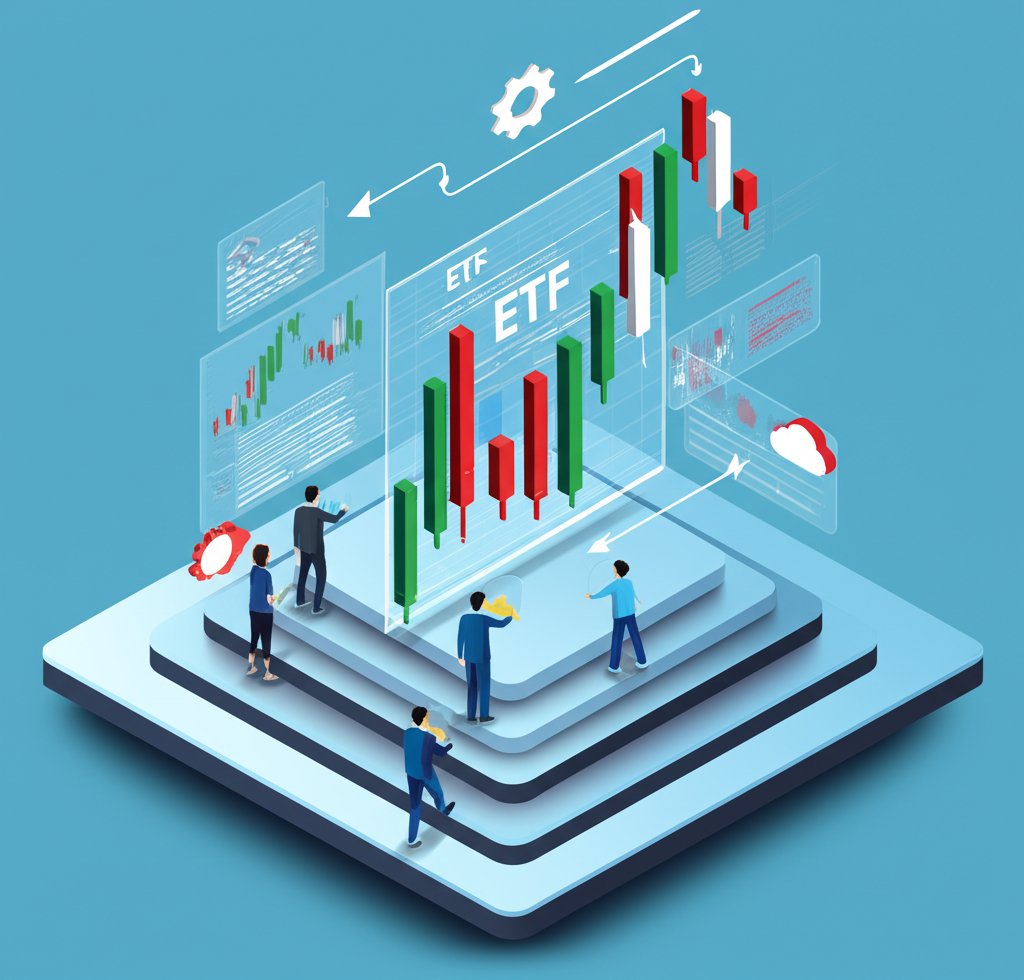
When markets churn, every basis point, every tick, every ounce of capital efficiency matters. For years, investors and traders have debated the merits of various instruments to gain exposure to broad markets, commodities, or specific sectors. While Exchange Traded Funds (ETFs) have democratized access to diversified portfolios, a growing chorus of seasoned professionals points to another contender often overlooked by the retail public: futures contracts. Specifically, when we talk about ETF futures trading, we're often talking about using futures instead of or alongside ETFs to achieve superior outcomes. The question isn't just if futures are efficient, but why they frequently present a more compelling proposition.
You're about to dive deep into a world where managing risk, maximizing capital, and executing trades with precision are paramount. We’ll explore why primary futures contracts – the very instruments many ETFs are built upon – often outshine their ETF counterparts in several critical aspects, offering a level of efficiency that can significantly impact your bottom line.
At a Glance: Why Futures Often Win on Efficiency
- Zero Management Fees: Unlike ETFs, futures contracts don't charge annual management fees.
- Superior Capital Efficiency: Margins for futures are typically less than 5% of notional value, compared to 50% for ETFs.
- Near 24/6 Trading: Futures offer almost continuous access, allowing for immediate response to global news.
- Unmatched Liquidity: Primary futures contracts often trade 11 to 600 times more dollar volume daily than their ETF equivalents.
- Precise Tracking: Futures tend to track their underlying assets with minimal error, reducing slippage.
- Versatile Strategic Tool: Excellent for hedging, speculation, and dynamic portfolio adjustments.
More Than Just a Number: What Drives True Trading Efficiency?
Efficiency in trading isn't just about speed; it's a multi-faceted concept encompassing cost, capital utilization, market access, and the fidelity with which an instrument tracks its underlying asset. It’s about getting the most out of your capital for the least amount of friction and cost.
For decades, futures contracts have been the bedrock of institutional hedging and speculation, tracing their origins back to the mid-1800s. ETFs, a much more recent innovation, first appeared in 1993, offering a convenient, diversified, and often low-cost way to invest. But as the financial landscape evolved, so did futures, with the introduction of investor-friendly contracts like CME Group's E-mini S&P 500 futures in 1997, and later Micro E-mini Futures in 2019. These smaller, electronically traded contracts democratized access to the same powerful tools institutions use, making ETF futures trading (or more accurately, trading futures as an alternative to or complement for ETFs) a viable strategy for a wider audience.
The Head-to-Head: Futures Contracts vs. ETFs
Let's dissect the core reasons why futures contracts frequently deliver a more efficient trading experience compared to their ETF brethren, drawing on insights from market leaders like CME Group.
1. The Hidden Cost: Management Fees
You invest in an ETF, and year after year, a small percentage of your assets disappears, silently deducted as an annual management fee (the expense ratio). While often low, these fees accumulate, eroding returns over time.
- Futures Contracts: Here's a powerful advantage: futures contracts simply do not carry annual management fees. You pay a commission to your broker for executing the trade, and there are exchange and regulatory fees, but no ongoing percentage of your asset value is taken out. This direct cost saving can be substantial, especially for actively managed strategies or large positions.
- ETFs: These funds require professional management, administration, and marketing, all of which are paid for by the annual expense ratio. Even passive ETFs tracking major indices have these fees, ranging from a few basis points to over 1% for more specialized or actively managed funds.
Think of it this way: buying a futures contract is like directly renting a specific financial exposure for a set period. There's no ongoing landlord fee, just the initial brokerage transaction cost. ETFs, on the other hand, are like owning a share in a professionally managed apartment building – you pay for the management whether you like it or not.
2. Capital Efficiency: Unlocking Your Portfolio's Potential
Perhaps the most compelling argument for futures, particularly for traders and investors seeking to maximize their capital, lies in their superior capital efficiency. This refers to how much collateral you need to put up to control a certain notional value of an asset.
- Futures Contracts: Futures operate on a performance bond margin system. You're not buying the underlying asset outright; you're entering into a contract to buy or sell it at a future date. The margin required is typically a small fraction of the contract's total value—often less than 5% of the notional amount. This means you can control a much larger dollar amount of an asset with relatively less capital, freeing up the rest of your funds for other investments or to maintain liquidity. This high leverage (inherent in the margin system) demands careful risk management but significantly boosts capital efficiency.
- ETFs: When you buy an ETF, you're buying shares of a fund. If you trade on margin, you're typically subject to Reg T margins, which demand 50% of the value of the stock or ETF as initial collateral. This is a significantly higher capital requirement compared to futures.
For instance, controlling $100,000 worth of S&P 500 exposure might require $50,000 with an ETF on margin, but potentially only $5,000 (or even less for Micro E-minis) with an S&P 500 futures contract. This difference is stark and allows market participants to allocate capital far more strategically when utilizing futures. For more detail on how these instruments work, consider Understanding ETF futures in the broader market context.
3. 24-Hour Trading Access: Responding to a Global Market
Financial markets never truly sleep. Major news events, economic data releases, and political shifts can occur at any hour, impacting asset prices globally.
- Futures Contracts: One of the hallmark advantages of futures is their near 24-hour trading access. Most major futures contracts, like those on indices, commodities, and currencies, trade almost 24 hours a day, six days a week, on electronic platforms like CME Globex. This allows traders to react instantly to overnight news from Asia or Europe, manage positions, and enter or exit trades without waiting for traditional market opening bells.
- ETFs: ETFs trade during regular exchange hours (e.g., 9:30 AM to 4:00 PM ET for U.S. markets). While some brokers offer extended or after-hours trading, this liquidity is typically much thinner than during regular hours, leading to wider bid-ask spreads and potential price dislocations. If a major event happens overnight, you might be forced to wait until morning, potentially missing critical entry or exit points.
This constant market access provides a significant edge in risk management and opportunistic trading, making futures particularly efficient for those engaged in active trading or international portfolio management.
4. Unmatched Liquidity: Smooth Execution, Tighter Spreads
Liquidity is the lifeblood of efficient markets. It refers to how easily an asset can be bought or sold without significantly affecting its price. High liquidity means many buyers and sellers, resulting in tight bid-ask spreads and minimal slippage.
- Futures Contracts: Primary futures contracts are, without exaggeration, titans of liquidity. The E-mini S&P 500 futures contract, for example, is the most liquid stock index futures contract globally. According to CME Group data, S&P 500 futures outtrade the top S&P 500 ETFs by a factor of 11 times in average daily dollar volume. The disparity is even more dramatic for other asset classes: Treasuries, Crude oil, and Gold futures can trade 20-600 times greater dollar value daily than their ETF equivalents. This immense volume translates into incredibly tight bid-ask spreads and the ability to execute large orders with minimal market impact.
- ETFs: While many popular ETFs boast good liquidity, especially those tracking major indices, they generally lack the sheer critical mass seen in the primary futures markets. For less popular or niche ETFs, liquidity can thin out, leading to wider spreads and higher transaction costs.
For institutional players and even active individual traders, this superior liquidity of futures means more efficient order execution and less "slippage" (the difference between the expected price of a trade and the price at which it is actually executed).
5. Precision Tracking: Staying True to the Underlying
An instrument's ability to accurately reflect the price movements of its underlying asset is crucial for effective portfolio management and speculation.
- Futures Contracts: Futures are designed to track their underlying assets very closely. The convergence of futures prices to spot prices as expiration approaches, coupled with the arbitrage activities of market participants, ensures minimal tracking error.
- ETFs: While many ETFs do a commendable job tracking their benchmarks, some can experience significant tracking error. This is especially true for commodity ETFs that rely on futures contracts to gain exposure. These funds often face challenges like "contango" (where future prices are higher than spot prices, leading to negative roll yield) and "backwardation" (where future prices are lower than spot prices, leading to positive roll yield), which can cause the ETF's performance to diverge from the spot price of the commodity. Leveraged and inverse ETFs are particularly prone to tracking issues over longer periods due to daily rebalancing.
When you're dealing with futures directly, you're interacting with the instrument that sets the price discovery for many of these underlying markets, often providing a more direct and accurate representation of the market's current valuation.
Beyond Efficiency: Strategic Benefits of Trading Futures
While efficiency is a strong motivator, the strategic versatility of futures further cements their position as a powerful financial tool.
Hedging: Shielding Your Portfolio
Futures contracts are classic hedging instruments. If you hold a long portfolio of S&P 500 stocks, you can sell S&P 500 futures contracts to hedge against potential downturns. A decline in your stock portfolio would be offset, at least in part, by gains in your short futures position. This allows you to protect your portfolio value without having to sell off your underlying stock holdings.
Diversification and Exposure: Beyond Stocks and Bonds
Futures offer direct, efficient exposure to a vast array of asset classes beyond traditional stocks and bonds:
- Commodities: Gold, crude oil, natural gas, agricultural products, industrial metals.
- Currencies: Major and emerging market currency pairs.
- Interest Rates: Treasury bonds, Eurodollars.
- Equity Indices: S&P 500, Nasdaq 100, Dow Jones, Russell 2000.
This broad accessibility enables precise portfolio diversification and allows you to capitalize on trends in various global markets.
Leverage: The Double-Edged Sword
As discussed under capital efficiency, futures inherently offer significant leverage. A small movement in the underlying asset can lead to a magnified profit or loss relative to the initial margin deposited. This can amplify returns on correct predictions but also accelerate losses on incorrect ones. Understanding and managing this leverage through appropriate position sizing and stop-loss orders is paramount. Leverage makes futures efficient, but also demands respect.
Speculation: Capturing Short-Term Opportunities
For active traders, futures provide an excellent vehicle for speculation. Their liquidity, 24-hour access, and tight spreads make them ideal for day trading, swing trading, and event-driven strategies. You can easily go long (bet on price increases) or short (bet on price decreases) with equal ease, making them versatile for both bullish and bearish market views.
Understanding Futures-Based ETFs: A Different Beast
It's important to distinguish between directly trading futures contracts and investing in "futures-based ETFs." Many commodity ETFs, for instance, don't hold the physical commodity; instead, they gain exposure by holding a portfolio of futures contracts on that commodity.
ETF Database provides comprehensive data on these U.S.-listed Futures-Based Commodity ETFs, which can include leveraged and inverse products. They offer insights into:
- Historical Performance and Dividends: How the ETF has performed over time and any payouts.
- Holdings Data: What specific futures contracts they hold and their concentration.
- Expense Ratios: The annual fees, which are often higher than plain-vanilla equity ETFs due to the complexity of managing futures.
- Fund Flow Data: Capital inflows and outflows, indicating investor sentiment.
- ESG Scores and Tax Information: Additional dimensions for consideration.
- ETF Database Ratings: Quantitative evaluations relative to other products in their category.
The ETF Database also maintains rankings, updated weekly, for both Commodity Exposure Power (ranking U.S.-listed Futures-Based and Physically-Backed commodity ETFs based on fund flows, returns, AUM, expenses, and dividend yield) and ETF Issuer Rankings for Futures-Based Commodities (ranking issuers by estimated revenue, fund flows, returns, AUM, expenses, and dividend yield of their commodity-focused futures-based ETFs).
While futures-based ETFs offer convenience for gaining commodity exposure without directly managing futures contracts, they come with their own set of challenges, particularly "roll risk." When a futures contract held by the ETF approaches expiration, the fund must "roll" its position into a later-dated contract. If the later-dated contract is more expensive (contango), this rolling process can lead to a drag on performance, causing the ETF to underperform the spot price of the commodity. Directly trading futures allows you to manage this roll personally, or even to avoid it by closing positions before expiry.
Potential Pitfalls and How to Navigate Them
Despite their efficiency, futures trading isn't without its complexities and risks.
- Leverage Magnifies Losses: This is the most critical point. While capital efficiency is a benefit, it means smaller price movements can lead to significant losses if not managed properly. Always understand your maximum potential loss and use stop-loss orders.
- Margin Calls: If your position moves against you and your account equity falls below the maintenance margin level, your broker will issue a "margin call," requiring you to deposit additional funds. Failure to meet a margin call can lead to forced liquidation of your position.
- Expiration Dates: Futures contracts have fixed expiration dates. You must either close your position before expiry, roll it into a new contract, or (for physical commodities) be prepared for physical delivery – an outcome most financial traders aim to avoid. This contrasts with ETFs, which generally have no expiration.
- Market Volatility: Futures markets can be highly volatile. While 24-hour trading offers flexibility, it also means prices can move dramatically overnight.
- Complexity: Understanding contract specifications, margin requirements, tick values, and expiration cycles requires a steeper learning curve than buying an ETF.
To mitigate these risks:
- Educate Yourself: Thoroughly understand the contract you're trading.
- Start Small: Begin with Micro E-mini contracts or smaller position sizes.
- Implement Strict Risk Management: Use stop-loss orders, define your maximum risk per trade, and never over-leverage.
- Practice with a Demo Account: Many brokers offer paper trading accounts where you can practice without risking real capital.
Is Trading Futures Right for You? Key Questions to Ask
Before diving into futures trading, consider these questions:
- What is your trading objective? Are you hedging an existing portfolio, speculating on short-term movements, or seeking diversified exposure?
- What is your risk tolerance? Can you comfortably handle the amplified gains and losses that come with leverage?
- How much capital are you willing to allocate? While capital efficient, you still need sufficient funds to cover potential losses and margin calls.
- How much time can you dedicate to learning and monitoring? Futures trading demands a higher level of engagement and understanding than passively investing in ETFs.
- Do you have access to the right brokerage and tools? Ensure your broker offers the futures contracts you're interested in, a reliable trading platform, and competitive commissions.
For many, the answer might be a hybrid approach: using ETFs for long-term, passive index exposure, and strategically employing futures for active management, hedging, and accessing specific, efficient market segments.
Moving Forward: Embracing Efficiency in Your Strategy
The landscape of financial instruments is rich and varied, but for those who demand precision, cost-effectiveness, and robust market access, futures contracts often stand apart. Their inherent advantages in capital efficiency, freedom from management fees, continuous trading access, and unparalleled liquidity make them a compelling choice for optimizing your trading and investment strategies.
Whether you're a seasoned trader looking to refine your edge or an investor exploring more advanced tools for portfolio management, understanding the unique efficiencies of futures trading is an invaluable step. It's about empowering yourself with instruments that not only offer broad market access but also do so with an economy of capital and execution that ETFs, by their very design, often cannot match. Take the time to educate yourself, practice diligently, and integrate these powerful tools thoughtfully into your financial arsenal. The market waits for no one, and armed with this knowledge, you're better prepared to navigate its complexities with greater confidence and efficiency.