
Trading cryptocurrency can feel like navigating an ocean—sometimes calm, sometimes turbulent. The difference between a smooth journey and getting caught in a storm often boils down to one critical factor: cryptocurrency exchange liquidity. Without deep liquidity, even a small trade can send ripples through the market, distorting prices and costing you more than you anticipated. It’s not just about finding an exchange that lists your preferred coin; it's about finding one where you can buy or sell it efficiently, at a fair price, without materially affecting its value. This underpins stable trading, attracts serious capital, and ultimately fuels market growth.
At a Glance: What You'll Discover
- The Real Impact of Liquidity: Understand how deep liquidity directly translates to stable prices and faster trade execution for you.
- Beyond Volume: Learn to identify key metrics like market depth that offer a truer picture of an exchange's liquidity.
- Navigating Low-Liquidity Pitfalls: Recognize the dangers of wide bid-ask spreads, slippage, and increased market manipulation risks.
- Evaluating Exchanges Like a Pro: Get actionable strategies to assess and choose exchanges that offer the liquidity you need for your trading style.
- Growth Drivers: See how robust liquidity attracts institutional players and fosters overall market health.
What is Cryptocurrency Exchange Liquidity, Really?

In its simplest form, liquidity in financial markets means how easily and quickly an asset can be bought or sold without significantly changing its price. Think of it like a bustling marketplace: if there are plenty of buyers and sellers for a specific item, you can quickly offload yours or acquire more without impacting its going rate. High liquidity signifies a healthy, active market.
On a cryptocurrency exchange, this translates to your ability to convert a digital asset into another cryptocurrency or fiat currency (like USD) swiftly, at a price very close to your expectation. When an exchange boasts strong cryptocurrency exchange liquidity, it means there's a robust order book with numerous buy and sell orders at various price points. This dense network of participants ensures that your trade—whether large or small—is absorbed by the market without causing sudden, drastic price swings. It’s the difference between executing a trade instantly at the displayed price and seeing your order partially filled at progressively worse prices.
Why Liquidity Isn't Just a Number: Impact on Your Trades and Market Health
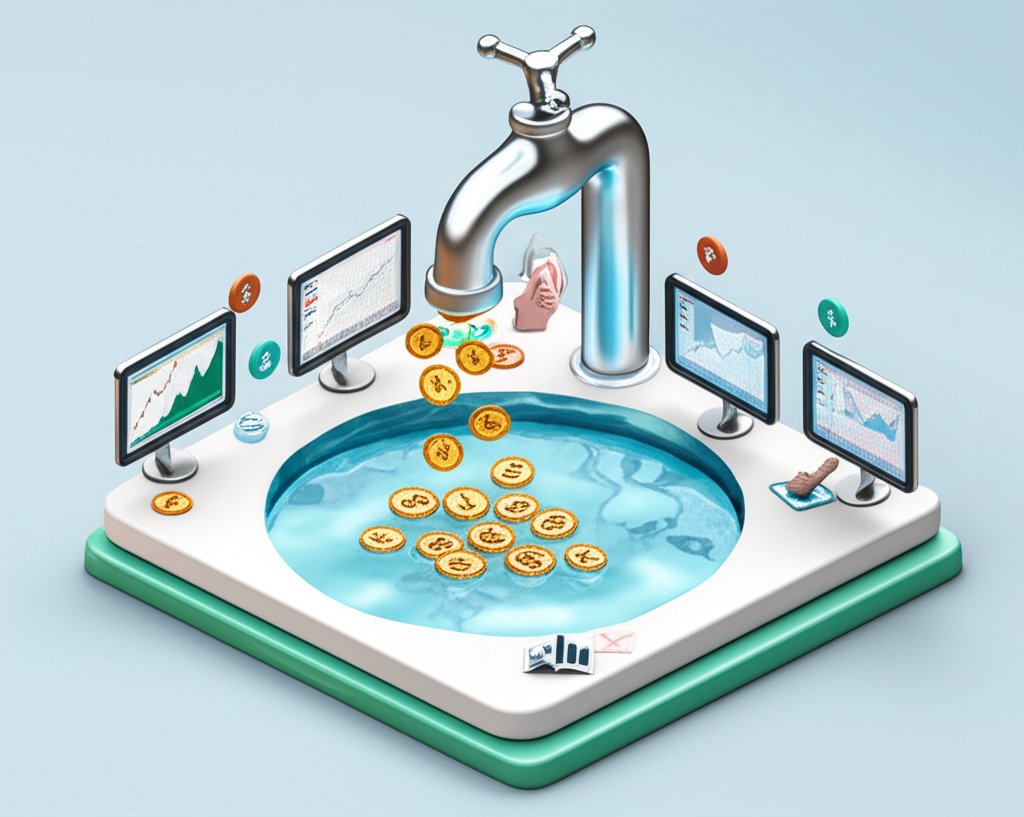
The depth and breadth of liquidity on a cryptocurrency exchange directly influence your trading experience and the overall health of the crypto market. Ignoring it is like buying a car without checking the engine—you might get moving, but you're in for a bumpy ride.
Price Stability: Reducing the Ripple Effect
Imagine trying to sell a large amount of Bitcoin on an exchange with thin liquidity. Your sell order might "eat through" all the available buy orders at the current price, then the next lowest, and so on. This cascade of events can drive the price down significantly, causing you to sell at a much lower average price than you initially intended. High liquidity, with its abundant buy and sell orders, acts as a buffer. It absorbs large trades without dramatic price shifts, leading to more stable and predictable market movements. This stability is crucial for both individual traders and the broader market's credibility.
Efficient Trading and Minimal Slippage
When you place a market order, you expect it to be executed at or very near the current market price. On a low-liquidity exchange, you often encounter "slippage"—the difference between your expected trade price and the actual execution price. This happens because your order has to clear multiple price levels in the order book to be fully filled, especially if you're trading a substantial amount. Ample cryptocurrency exchange liquidity minimizes slippage, ensuring your trades execute faster and closer to your desired price. This efficiency is paramount for day traders and automated trading systems that rely on precise entry and exit points.
Market Credibility and Attracting Serious Capital
A liquid market is a credible market. When institutions or large individual investors look to enter the crypto space, their primary concern is often the ability to execute significant trades without causing market disruption. Exchanges with deep liquidity signal reliability and trustworthiness. They attract larger players, including institutional investors and hedge funds, which in turn brings even more capital and further deepens liquidity—a virtuous cycle that benefits everyone. This flow of serious capital is vital for the long-term growth and maturation of the entire crypto ecosystem.
The Anatomy of Crypto Exchange Liquidity: Key Metrics Beyond Volume
It's easy to get fixated on trading volume, but true liquidity is a more nuanced beast. While high volume often correlates with good liquidity, it doesn't tell the whole story. To truly understand an exchange's liquidity, you need to look at several interconnected factors.
Trading Volume: The Surface-Level Indicator
This is the most straightforward metric: the total amount of an asset traded over a specific period (e.g., 24 hours). High trading volume suggests active participation and generally better liquidity. However, it can be misleading. As noted by Kaiko’s rankings, an exchange like Binance might lead in volume but not necessarily in all aspects of liquidity, especially when governance scores are factored in. Volume also doesn't differentiate between genuine trading and potential wash trading, where market participants artificially inflate volume to create a false sense of activity.
Market Depth: The True Measure of Available Capital
Market depth is arguably the most crucial indicator of liquidity. It refers to the number of buy and sell orders for a specific asset at various price levels around the current market price. A "deep" market has a large number of orders on both the buy (bid) and sell (ask) sides, meaning there's significant capital waiting to be deployed.
Consider two exchanges:
- Exchange A: $1,000,000 in buy orders and $1,000,000 in sell orders within 1% of the current price.
- Exchange B: $100,000 in buy orders and $100,000 in sell orders within 1% of the current price.
Exchange A has significantly more depth. A large trade on Exchange A would have less impact on the price than the same trade on Exchange B. Kaiko's analysis highlights this distinction, showing that LMAX, despite offering only five assets, boasts the highest average market depth ($230 million) due to its focus on institutional clients who demand significant liquidity. This demonstrates that asset diversity doesn't always equate to superior depth.
Available Trading Pairs: More Options, More Flow
The variety of trading pairs an exchange offers also impacts its overall liquidity. More pairs mean more avenues for users to move assets, which can drive overall volume and, indirectly, liquidity. An exchange like Binance, which offers twice as many assets as Upbit, for example, might have four times the trading volume, showing how asset variation can indeed fuel activity. However, as the LMAX example shows, a narrower focus on high-demand institutional pairs can still lead to exceptional depth.
Presence of Market Makers: The Unsung Heroes
Market makers are entities that actively place both buy and sell orders on an exchange, essentially "making a market." They provide liquidity by narrowing the bid-ask spread and ensuring there's always someone willing to buy or sell. Exchanges often run incentive programs to attract professional market makers, as their presence is critical for maintaining robust and consistent liquidity. Without them, order books would be sparse and fragmented.
General Market Stability: A Macro Factor
Broader market conditions significantly influence individual exchange liquidity. During periods of high volatility or uncertainty, liquidity can dry up across the board as traders pull orders or demand higher risk premiums. Conversely, positive news, like the approval of US Bitcoin ETFs, can rapidly boost liquidity as seen with LMAX's increased market depth in November 2023 and February 2024.
Navigating the Dangers of Low Liquidity
Understanding these liquidity metrics isn't just academic; it's a shield against significant trading pitfalls. Low liquidity on a cryptocurrency exchange can quickly turn a profitable strategy into a costly one.
- Wider Bid-Ask Spreads: This is the most immediate sign of low liquidity. The "spread" is the difference between the highest price a buyer is willing to pay (bid) and the lowest price a seller is willing to accept (ask). In a thinly liquid market, this gap widens considerably, meaning you pay more when buying and receive less when selling. This wider spread acts as a hidden transaction cost.
- Higher Price Volatility: With fewer orders in the book, even relatively small trades can cause disproportionately large price movements. This makes prices more erratic and unpredictable, increasing the risk for traders.
- Increased Slippage: As mentioned, your market orders will "slip" further from your intended price, especially for larger amounts. This directly impacts your profitability and can negate the gains from an otherwise good trade.
- Vulnerability to Manipulation: Illiquid markets are easier to manipulate. A single large player could execute "pump and dump" schemes or "spoofing" (placing large orders without intent to fill them) to trick others and profit. Monitoring market depth helps detect such practices and avoids being a victim of wash trading, where artificially inflated volumes hide a lack of genuine interest.
- Deterrent for Institutional Investors: Large institutional players require the ability to move vast sums of capital without disrupting the market. Low liquidity makes this impossible, effectively cutting off a crucial source of growth and stability for the crypto ecosystem.
Building a Robust Foundation: Strategies for Exchanges to Boost Liquidity
Exchanges are keenly aware of the critical role of liquidity and employ various strategies to cultivate it. For users, understanding these strategies can provide insight into which exchanges are actively working to improve their trading environment.
- Market-Making Programs: Many exchanges offer incentives, such as reduced fees or rebates, to professional market makers. These programs encourage market makers to maintain tight spreads and significant order book depth, directly enhancing cryptocurrency exchange liquidity.
- Introducing New Trading Pairs: While not a standalone solution, thoughtfully adding new, in-demand trading pairs can attract more traders and trading volume, especially if these pairs involve highly liquid assets.
- Encouraging Institutional Engagement: Building robust infrastructure, offering advanced trading tools, and ensuring regulatory compliance are key to attracting institutional clients. As exemplified by LMAX, catering to institutional needs can lead to exceptionally deep liquidity for specific assets. This focus shifts the typical retail-driven liquidity paradigm towards much larger, more stable capital pools.
- Advanced Matching Engines: High-performance matching engines ensure orders are processed quickly and efficiently, even during peak activity. This speed and reliability contribute to a perception of better liquidity and a smoother trading experience.
- Cross-Exchange Liquidity Aggregation: Some platforms aggregate liquidity from multiple exchanges or dark pools to offer users a deeper combined order book. While less common for individual users directly accessing a single exchange, this backend strategy improves overall market efficiency.
Your Liquidity Playbook: How to Evaluate and Choose Exchanges
Selecting an exchange isn't just about the lowest fees or the coolest interface. For serious traders, understanding and prioritizing liquidity is paramount. Here’s a practical playbook for making informed decisions:
1. Look Beyond Reported Volume
Always be skeptical of reported 24-hour volumes, especially for smaller exchanges or less-known altcoins. Focus on exchanges consistently ranked highly by independent analytics firms like Kaiko, which use more sophisticated metrics than just raw volume. While Binance often leads in volume, recognize that other exchanges might excel in specific liquidity aspects like market depth.
2. Prioritize Market Depth
This is your most critical metric.
- Inspect Order Books: Manually examine the order books for your preferred trading pairs. How many orders are clustered around the current price? How quickly does the price move if you simulate a medium-sized order? A healthy order book shows substantial buy and sell interest within 1-2% of the market price.
- Use Tools: Many trading platforms offer "depth charts" or "order book visualizations" that graph the cumulative buy/sell orders at different price levels. A steep curve indicates good depth, while a shallow, jagged curve suggests poor liquidity.
- Aim for a Tight Bid-Ask Spread: A healthy, liquid market will have a very small difference between the bid and ask price. If this spread is wide (e.g., 0.5% or more for a major coin), you're paying a premium on every trade.
3. Consider Your Trade Size and Asset Choice
- Large Trades: If you're executing significant trades, market depth becomes non-negotiable. An exchange like LMAX, known for its deep institutional liquidity, might be more suitable for large-volume transactions in major assets like Bitcoin.
- Altcoins: Be extra cautious with illiquid altcoins. Even a small trade can drastically move their price. Stick to exchanges with demonstrable depth for these assets, or consider smaller trade sizes to mitigate slippage.
- Diversification: While Kaiko noted that more assets can drive volume (Binance vs. Upbit), remember that depth for specific assets is key. An exchange might have many coins but poor depth for the one you want to trade.
4. Observe Market Behavior
- Volatility: Is the price of your chosen asset unusually volatile on one exchange compared to others? This could be a sign of thin liquidity.
- Execution Speed: Do your market orders fill instantly and completely? Or do they take time and get partially filled, potentially at different prices?
- Slippage History: Track your actual execution prices versus the quoted price when you placed a market order. Consistent, noticeable slippage is a red flag.
5. Research Exchange Reputation and Governance
An exchange’s operational transparency and security practices, often reflected in "governance scores" (as per Kaiko's methodology), indirectly influence liquidity. A well-run, trustworthy exchange is more likely to attract both retail and institutional capital, leading to deeper liquidity over time.
For a broader understanding of how to find the right exchange that aligns with your specific trading needs, including a deeper dive into overall exchange evaluation frameworks, you can refer to our guide on how to Find best crypto liquidity.
Beyond Exchanges: Types of Liquidity in the Crypto Ecosystem
While we've focused heavily on exchange liquidity, it's worth briefly touching on other forms of liquidity that collectively underpin the entire crypto ecosystem. These aspects often interact with and influence the liquidity you experience on centralized exchanges.
- Asset Liquidity: This refers to the inherent ease with which a particular cryptocurrency can be traded across any platform. Bitcoin and Ethereum generally have high asset liquidity because they are widely accepted. Newer or niche tokens often have low asset liquidity.
- Network Liquidity: This describes a blockchain's ability to process transactions quickly and reliably. A congested network can hinder asset movement, indirectly affecting the real-time liquidity available on exchanges.
- DeFi Liquidity: In decentralized finance (DeFi), liquidity is typically provided by users who "stake" their assets into liquidity pools. This allows for peer-to-peer token swaps without a centralized exchange. This form of liquidity is crucial for the growth of decentralized applications.
- Stablecoin Liquidity: Stablecoins like USDT or USDC are designed to maintain a stable value, usually pegged to fiat currency. Their liquidity refers to the ample supply needed to ensure this peg holds true and they can be easily converted to fiat or other cryptocurrencies. Without sufficient stablecoin liquidity, their utility as a trading pair and a store of value would diminish.
These different layers of liquidity highlight the complexity and interconnectedness of the crypto market. While you directly interact with exchange liquidity, these other forms contribute to the foundational health and efficiency of the entire system.
Quick Answers: Unpacking Common Liquidity Questions
Q: Does high volume always mean good liquidity?
A: Not necessarily. While high volume is often a good sign, it doesn't guarantee deep market depth. Some volume can be inflated by wash trading, where participants trade with themselves to create a false impression of activity. Always check market depth (order book density) alongside volume for a more accurate picture.
Q: How does slippage relate to liquidity?
A: Slippage is a direct consequence of low liquidity. When there aren't enough buy or sell orders at your desired price, your trade might be executed at progressively worse prices until it's fully filled, leading to a difference between your expected and actual execution price. High liquidity minimizes slippage.
Q: Why do smaller altcoins often have poor liquidity?
A: Smaller altcoins typically have lower market capitalization and less trading interest. Fewer participants mean fewer buyers and sellers, resulting in sparse order books, wider bid-ask spreads, and higher price volatility, all indicative of poor liquidity.
Q: Can an exchange's liquidity change quickly?
A: Yes, very quickly. Major market news (e.g., regulatory announcements, economic data, ETF approvals), sudden price movements, or even technical issues can cause liquidity to dry up or increase rapidly. This dynamic nature is why constant vigilance is important.
Q: How do institutions impact cryptocurrency exchange liquidity?
A: Institutional players often trade large volumes, requiring deep liquidity to execute their orders without causing significant price impact. Their presence on an exchange significantly boosts market depth, contributing to overall stability and attracting even more capital, creating a positive feedback loop.
Your Next Move: Securing Smoother Crypto Trades
The takeaway is clear: cryptocurrency exchange liquidity isn't a peripheral concern; it's fundamental to profitable, secure, and efficient crypto trading. For you, the individual trader or investor, understanding and prioritizing liquidity means making deliberate choices about where and how you trade. Don't simply chase the latest buzz or the lowest listed fee without first scrutinizing the order books and market depth.
By evaluating exchanges based on genuine market depth, tight bid-ask spreads, and a history of stable execution, you arm yourself against unexpected costs and market manipulation. Embrace the insights from market analysis, paying attention to what drives real liquidity—whether it's institutional participation or well-supported market-making programs. This proactive approach will not only safeguard your capital but also empower you to participate in the crypto market with greater confidence and strategic advantage. Choose your battleground wisely; liquidity is your shield and your sword.